
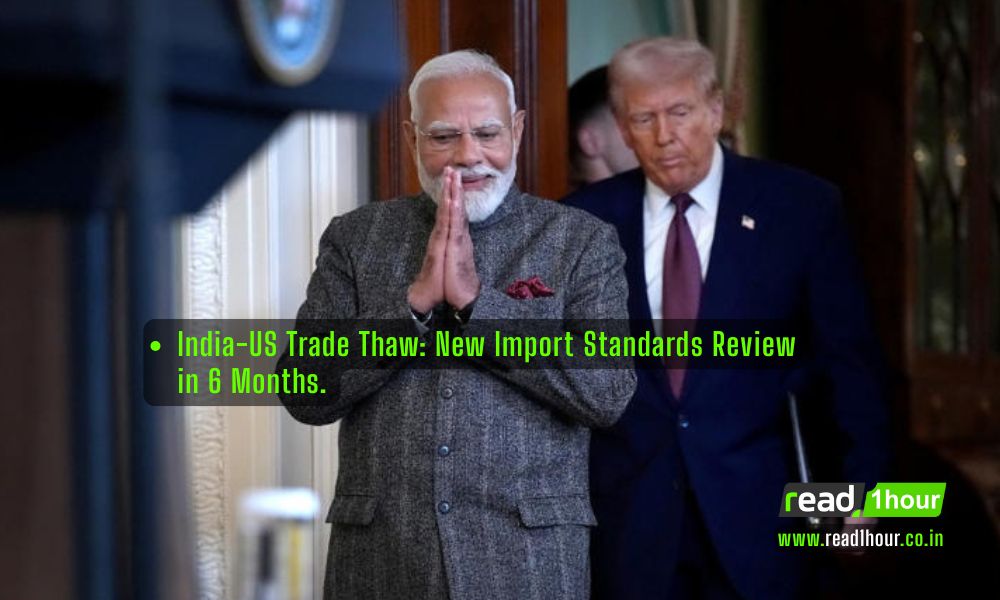
India-US Trade Thaw: New Import Standards Review in 6 Months.
read1hour delivers latest news, stock market updates, gadgets, mobile reviews, and trending stories daily.
A major breakthrough in India-US economic ties promises smoother trade and potentially cheaper high-quality goods for Indian consumers.
In a significant shift that could reshape the flow of goods between two of the world’s largest democracies, India has agreed to a critical new provision in its interim trade agreement with the United States. As part of a fresh framework announced this week, New Delhi has committed to reviewing the acceptance of US or global standards for key import sectors within the next six months.
"Six-Month" Clock Starts Now
For years, technical barriers and differing safety or quality standards have slowed down American exports to India. Under this new interim pact, India will assess whether it can accept US-developed or international standards for specific high-demand sectors.
This move is particularly game-changing for:
• Medical Devices: Streamlining approvals could mean faster access to cutting-edge American healthcare technology in Indian hospitals.
• ICT Goods: Information and Communication Technology products (like laptops and servers) often face restrictive import licensing. This review aims to simplify those hurdles.
• Agricultural Products: The agreement also targets long-standing non-tariff barriers affecting US food exports.
If the review leads to the acceptance of these global standards, it would effectively remove the "red tape" that often acts as a hidden tax on imported goods.
Beyond Standards: The Tariff Reset
This regulatory review is just one piece of a larger puzzle. The interim deal has also hit the reset button on tariffs.
• US Cuts Duties: The US is slashing tariffs on Indian goods—previously as high as 50% in some categories—down to a reciprocal rate of 18%. This is a massive relief for Indian exporters in textiles, leather, and gems.
• India Reciprocates: In return, India will eliminate or reduce duties on a wide range of US industrial goods and agricultural items like tree nuts and fruits.
What This Means for You
For the average Indian consumer and business owner, this "thaw" is good news. It signals a move away from the trade friction of 2025 and towards a more integrated market. The acceptance of global standards doesn't just help American companies; it ensures that Indian consumers get access to world-class products without unnecessary delays or price markups due to regulatory bottlenecks.
As both nations work toward a full Bilateral Trade Agreement (BTA), these next six months of "standards review" will be the true test of this renewed partnership.