
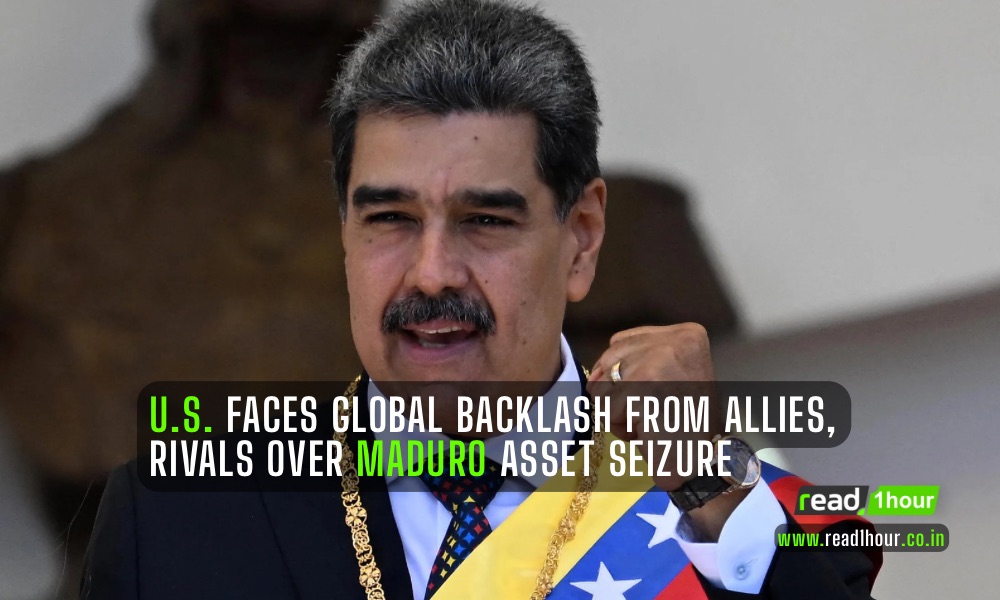
U.S. Faces Global Backlash From Allies, Rivals Over Maduro Asset Seizure
read1hour delivers latest news, stock market updates, gadgets, mobile reviews, and trending stories daily.
United States is facing sharp criticism from both allies and adversaries following its latest move involving the seizure of assets linked to Venezuelan President Nicolás Maduro. The decision has reignited international debate over economic sanctions, sovereignty, and Washington’s role in global political disputes.
According to U.S. officials, the seizure was carried out under existing sanctions frameworks aimed at pressuring Maduro’s government over alleged corruption, human rights violations, and democratic backsliding. American authorities argue that the action targets illicit financial networks rather than the Venezuelan people and is intended to hold leadership accountable.
However, the move has drawn strong reactions worldwide. Countries traditionally aligned with Washington expressed concern over the legal and diplomatic implications of the seizure. Several European and Latin American officials warned that such actions could undermine international norms and complicate diplomatic efforts to resolve Venezuela’s long-running political crisis.
U.S. critics say the decision risks isolating Washington at a time when global cooperation is increasingly fragile. Some allies argue that asset seizures without broader international consensus could set a precedent that other nations may exploit for political purposes. Others worry that unilateral measures may weaken trust in global financial systems.
Opposition voices within the United States have also raised questions. Lawmakers from both parties called for greater transparency, urging the administration to clarify how seized assets will be handled and whether they could be redirected toward humanitarian aid for Venezuelans suffering from economic collapse.
Venezuela’s government strongly condemned the move, labeling it an act of “economic aggression.” Officials in Caracas accused the U.S. of violating international law and vowed to challenge the seizure through diplomatic and legal channels. Maduro’s allies, including Russia and China, echoed these criticisms, framing the action as an example of Western overreach.
Analysts note that the backlash highlights the growing divide over how to deal with authoritarian governments. While sanctions and asset seizures have become a common tool of U.S. foreign policy, their effectiveness remains debated. Critics argue that such measures often harden political positions rather than encourage reform.
The controversy also comes amid renewed diplomatic efforts involving Venezuela’s opposition and regional partners. Some observers fear that heightened tensions could derail fragile negotiations aimed at restoring democratic processes and easing economic pressure on ordinary citizens.
Despite the criticism, U.S. officials defended the decision, stating that accountability remains a core principle of American foreign policy. “Those who profit from corruption and repression should not benefit from the international financial system,” a senior official said.
As global reactions continue to unfold, the seizure underscores the complex balance between enforcing sanctions and maintaining diplomatic credibility. Whether the move strengthens pressure on Maduro or deepens international divisions remains an open question.