
Israel Vows Defense Independence With $110 Billion Arms Expansion Strategy
Israel announces $110 billion arms expansion to reduce defense dependence on allies amid rising global security uncertainty.
Israel has announced an ambitious $110 billion defense expansion plan, signaling a decisive shift toward military self-reliance and reduced dependence even on long-standing allies. The move reflects lessons drawn from recent conflicts, supply delays, and geopolitical uncertainty, according to senior Israeli officials.
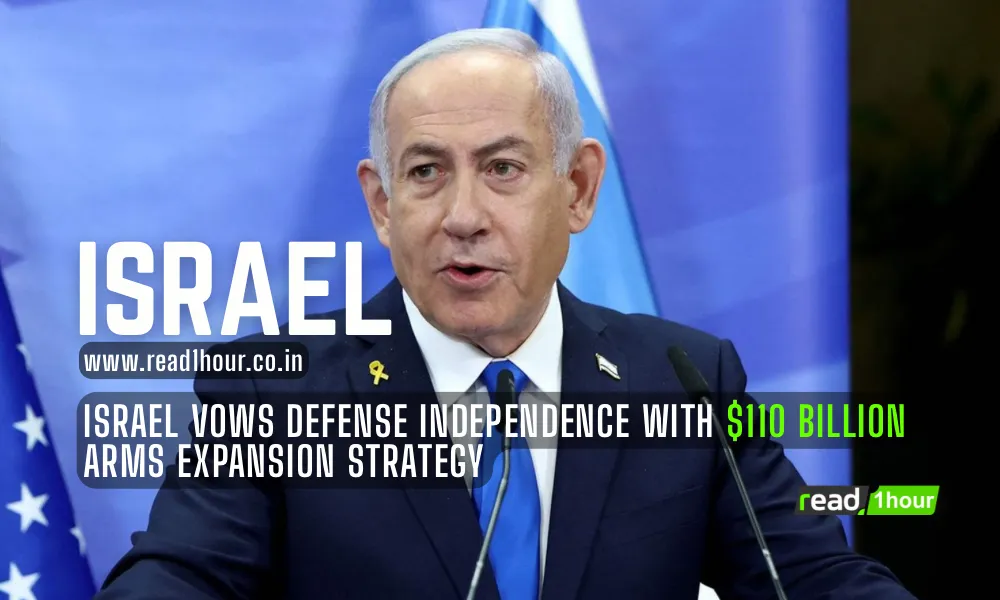
Speaking to defense industry leaders and lawmakers, government representatives said Israel can no longer assume uninterrupted access to foreign weapons systems, spare parts, or ammunition during prolonged crises. While strategic alliances remain important, officials stressed that national security demands domestic control over critical military capabilities.
The multi-year investment plan focuses on expanding Israel’s local arms production, including missiles, air defense systems, armored vehicles, drones, cyber warfare tools, and precision-guided munitions. Defense firms such as Israel Aerospace Industries, Rafael, and Elbit Systems are expected to play central roles in scaling manufacturing capacity and accelerating innovation.
Recent conflicts highlighted vulnerabilities in global supply chains, particularly during times of high international demand. Israeli defense planners noted that diplomatic pressure, export restrictions, and shifting political priorities abroad can delay or limit access to weapons — even from friendly nations. The new strategy aims to ensure Israel can sustain long-term operations independently if necessary.
Officials emphasized that the policy is not a rejection of allies, but rather a recalibration of defense priorities. Israel will continue cooperation with partners on technology sharing, intelligence, and joint development projects. However, leaders made clear that reliance on external approvals for key weapons is no longer acceptable.
Economically, the defense push is expected to create thousands of jobs and strengthen Israel’s high-tech manufacturing base. Analysts say the plan could also boost exports, as domestically developed systems gain wider international attention. Israel already ranks among the world’s top arms exporters, and expanded production may further enhance its global market position.
Critics, however, warn about the long-term financial burden. Allocating $110 billion to defense may strain public finances and divert resources from social programs. Some lawmakers have called for parliamentary oversight to ensure transparency and cost control throughout the rollout.
Regional experts say the announcement could influence Middle East security dynamics. Neighboring countries may view Israel’s expanded arms production as a signal of increased deterrence, while allies may reassess how defense cooperation evolves under the new policy.
Military analysts also point out that Israel’s focus on autonomy mirrors a broader global trend. Nations across Europe and Asia are increasingly seeking defense self-sufficiency amid rising geopolitical tensions and uncertain alliances.
As implementation begins, Israel’s leadership insists the goal is simple: never be strategically vulnerable due to external dependence. The success of the initiative will be measured not only by weapons produced, but by Israel’s ability to respond swiftly and independently in future crises.