
From Revolutionary Roots to Global Powerbroker: Delcy Rodríguez’s Shifting Path Toward Washington’s Orbit Amid Sanctions
Delcy Rodríguez’s political evolution reflects Venezuela’s shift from revolutionary ideology to pragmatic engagement amid sanctions and global pressur
Delcy Rodríguez’s political journey reflects the dramatic shifts inside Venezuela’s power structure over the past two decades. Once known primarily as a hardline revolutionary voice shaped by Hugo Chávez’s ideology, Rodríguez has emerged as one of the country’s most influential decision-makers, navigating international pressure, sanctions, and unexpected diplomatic recalibrations.
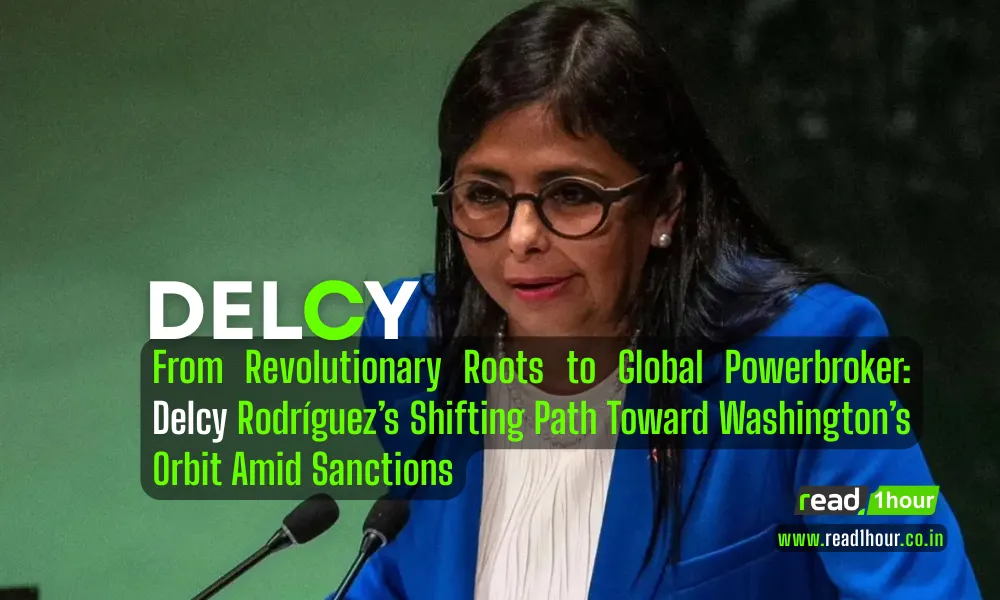
Rodríguez rose through the ranks as a loyal defender of
Venezuela’s Bolivarian Revolution. Trained as a lawyer and deeply embedded in
leftist political movements, she became a prominent figure during
confrontations with Western governments, frequently condemning U.S. foreign
policy and positioning herself as a vocal critic of Washington. Her early
career was defined by fiery speeches, sharp rhetoric, and firm alignment with
anti-imperialist ideals.
Over time, however, Venezuela’s economic collapse and
diplomatic isolation forced a strategic rethink. As sanctions tightened and oil
revenues plunged, Rodríguez transitioned from ideological firebrand to
pragmatic operator. Appointed to senior leadership roles, she became central to
efforts aimed at stabilizing the economy, reopening limited trade channels, and
engaging cautiously with global powers once considered adversaries.
This evolution has drawn attention internationally,
particularly in the United States. While not publicly aligned with former
President Donald Trump, Rodríguez’s recent policy direction has placed her
within Washington’s strategic orbit through indirect negotiations, sanctions
relief talks, and energy diplomacy. Analysts note that necessity, rather than
ideology, appears to be driving this recalibration.
Behind closed doors, Rodríguez has reportedly pushed for
selective engagement with U.S. institutions and multinational corporations,
especially in the energy sector. The goal has been to secure breathing room for
Venezuela’s economy without formally abandoning the government’s political
foundations. This balancing act—maintaining revolutionary legitimacy at home
while signaling flexibility abroad—has defined her current leadership style.
Supporters argue that Rodríguez represents a new generation of Venezuelan leadership capable of adapting to geopolitical realities. They credit her with helping reopen limited oil exports and stabilizing government finances under extraordinary pressure. Critics, however, see the shift as opportunistic, claiming it contradicts the revolutionary principles that once defined her rise. Transformation also highlights a broader trend in global politics, where ideological lines blur under economic strain. Rodríguez’s trajectory illustrates how leaders shaped by resistance movements can evolve into pragmatic power brokers when survival is at stake. Whether this shift leads to lasting normalization with the United States remains uncertain. What is clear is that Delcy Rodríguez has become a central figure in Venezuela’s recalibrated foreign strategy—one that blends revolutionary language with realpolitik maneuvering in an increasingly complex global landscape.