
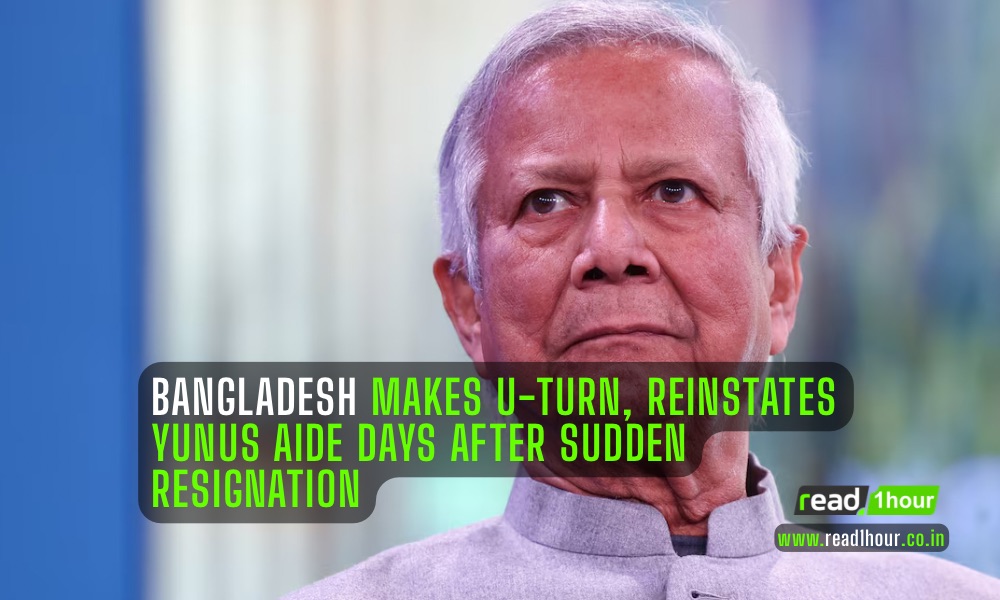
Bangladesh Makes U-Turn, Reinstates Yunus Aide Days After Sudden Resignation
Bangladesh reinstates a Yunus aide days after resignation, triggering political debate over transparency and government decision-making.
In a surprising political reversal, Bangladesh has reinstated a senior government official, a close aide of Nobel laureate Muhammad Yunus, just two days after accepting his resignation. The sudden U-turn has sparked debate across political and civil society circles, raising fresh questions about decision-making inside the government.
The official had stepped down earlier this week citing “personal reasons,” a move that quickly drew attention due to his long association with Yunus and his role in social development and economic policy initiatives. At the time, government sources suggested the resignation was final, making the swift reinstatement all the more unexpected.
On Friday, a government notification confirmed that the official would return to his previous position with immediate effect. Officials did not provide a detailed explanation for the reversal, stating only that the decision was taken “in the national interest” after further consultations.
Political analysts say the reinstatement reflects internal pressures and concerns about stability. “Such rapid reversals are rare and often indicate behind-the-scenes negotiations,” said a Dhaka-based political observer. “The government may have realized the importance of continuity, especially in departments handling sensitive economic and social programs.”
The episode has also revived discussion around the government’s relationship with figures associated with Muhammad Yunus, who has remained an influential voice in development and governance debates in Bangladesh. Supporters of the reinstated official welcomed the move, arguing that his experience and expertise are crucial at a time when the country is navigating economic uncertainty and policy reforms.
Opposition parties, however, questioned the transparency of the decision. Several leaders demanded clarity on why the resignation was accepted in the first place and what changed within 48 hours. “This flip-flop damages public confidence,” one opposition spokesperson said, calling for a clearer explanation from authorities.
Civil society groups echoed similar concerns, urging the government to ensure consistency in administrative decisions. Some analysts suggested the resignation may have triggered backlash from international partners or domestic stakeholders who value stability and institutional continuity.
The government has not indicated whether the reinstatement will lead to broader administrative changes. For now, officials insist that the matter is closed and that the focus remains on governance and policy delivery.
This incident comes at a politically sensitive moment for Bangladesh, as the country faces economic pressures, ongoing reforms, and heightened public scrutiny of leadership decisions. The quick reversal highlights how internal dynamics can shape outcomes in unexpected ways.
As reactions continue to unfold, the reinstatement underscores a broader reality of politics in the region—where decisions can change rapidly, often reflecting competing interests and evolving calculations behind closed doors.