
Why Indian Doctors Are Leaving UK Healthcare System In Growing Numbers
read1hour delivers latest news, stock market updates, gadgets, mobile reviews, and trending stories daily.
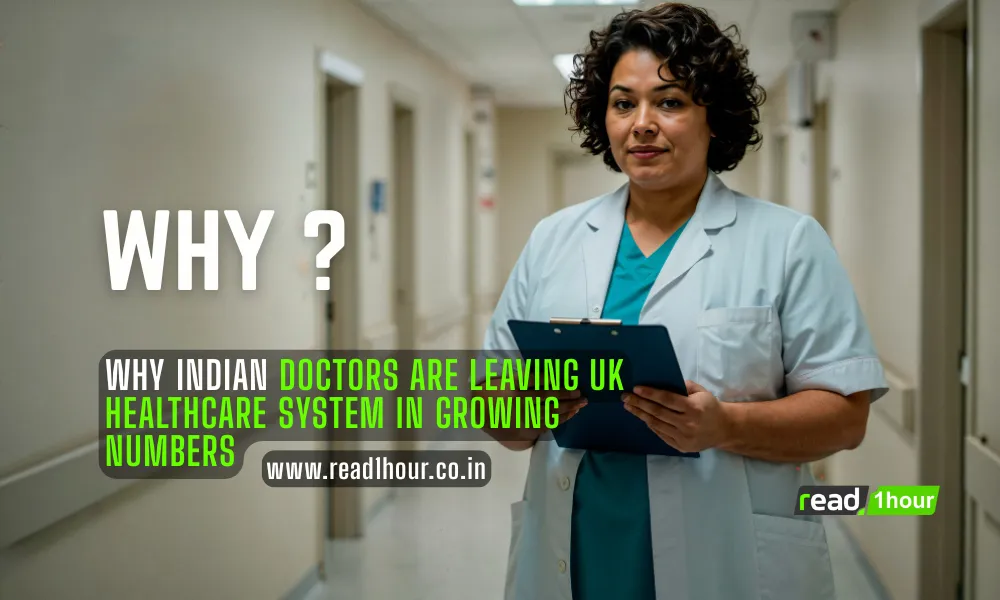
Over the past few years, a growing number of Indian doctors working in the United Kingdom have begun leaving the country, raising serious concerns about staffing pressures within the National Health Service (NHS). Once seen as a land of opportunity, the UK is increasingly losing its appeal for overseas medical professionals, particularly those from India who form one of the largest international doctor communities.
Indian doctors have long played a crucial role in supporting
Britain’s healthcare system, especially in understaffed hospitals and rural
regions. However, interviews with healthcare professionals and recent workforce
data reveal a combination of professional, financial, and personal challenges
driving this quiet exodus.
One major factor is workplace pressure. Many Indian
doctors report excessive workloads, long shifts, and staff shortages that
intensified after the COVID-19 pandemic. While these challenges affect all NHS
workers, international doctors often feel the strain more acutely due to
limited support networks and slower career progression.
Another key issue is career stagnation. Several
doctors say that promotion pathways remain unclear, with international medical
graduates finding it harder to access training opportunities and senior roles.
Despite years of service, many feel overlooked in favor of locally trained
professionals, leading to frustration and burnout.
Pay and cost-of-living pressures have also become
decisive factors. Rising housing costs, higher taxes, and inflation across the
UK have reduced the financial advantages that once attracted Indian doctors. At
the same time, countries like Australia, Canada, and even India are offering competitive
salaries, better work-life balance, and faster career growth, making relocation
an increasingly attractive option.
Visa uncertainty further adds to the challenge. Changes in
immigration rules, high visa renewal costs, and restrictions on family members
have left many doctors feeling insecure about their long-term future in the UK.
Some have expressed concerns that frequent policy shifts make it difficult to
plan stable lives for their families.
Social integration and discrimination issues have also
surfaced. While many Indian doctors report positive experiences, others
describe subtle bias, lack of institutional support, and feelings of isolation
within the workplace. These experiences, combined with professional stress,
have pushed some to seek more welcoming environments elsewhere.
The impact on the NHS is becoming visible. Health analysts
warn that losing experienced international doctors could deepen staffing
shortages and increase waiting times for patients. With demand for healthcare
services rising, the system’s dependence on overseas professionals remains
critical.
UK health authorities have acknowledged the problem and say
efforts are underway to improve retention, including better mentoring, clearer
training routes, and workplace well-being initiatives. However, experts argue
that without meaningful reforms addressing pay, workload, and immigration
stability, retaining Indian doctors will remain a challenge.
As global competition for skilled healthcare workers
intensifies, the UK faces a pivotal moment. Whether it can rebuild trust and
retain its international medical workforce may shape the future of its
healthcare system for years to come.