
Who Benefits From Osman Hadi Killing As Bangladesh Elections Draw Closer
Osman Hadi killing raises election concerns as analysts say neither BNP nor Awami League benefits from violence.
Killing of Osman Hadi ahead of Bangladesh’s closely watched elections has intensified political tensions and raised troubling questions about who truly benefits from such violence. While initial speculation quickly pointed fingers at the country’s two major rivals—the Bangladesh Nationalist Party (BNP) and the Awami League—political analysts increasingly suggest that neither side stands to gain from the incident.
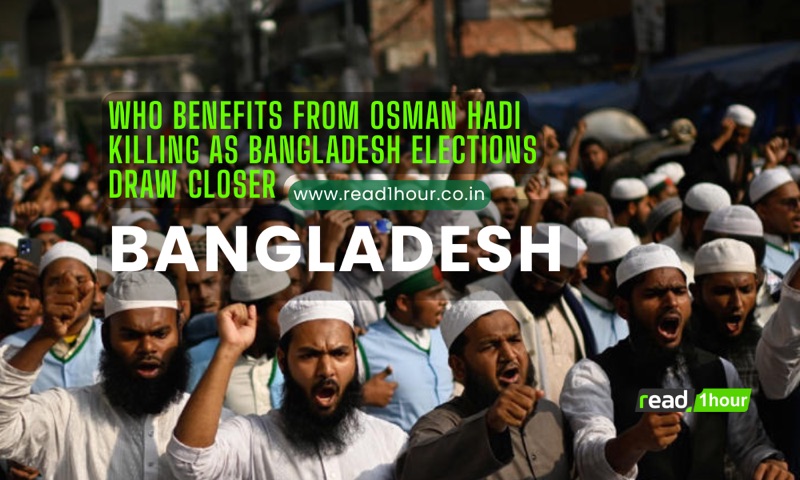
Osman Hadi’s death comes at a sensitive moment, with election campaigning accelerating and international attention focused on Bangladesh’s democratic process. Any outbreak of violence risks undermining public confidence, discouraging voter turnout, and drawing scrutiny from global observers. For both major parties, this instability could prove costly rather than advantageous.
Leaders from both the BNP and the Awami League have publicly condemned the killing, calling for a transparent investigation and justice for the victim. Political strategists argue that direct involvement by either party would be counterproductive, as it could alienate undecided voters and invite legal or diplomatic consequences. With elections approaching, both sides are keen to project an image of stability and governance readiness.
Analysts instead point to the possibility of third-party actors benefiting from heightened chaos. Smaller political groups, criminal networks, or extremist elements could exploit rising tensions to weaken mainstream parties or disrupt the electoral process. In volatile political environments, targeted killings often create confusion and mistrust, allowing less visible actors to shape narratives behind the scenes.
Security experts also highlight that election periods are historically vulnerable to misinformation and provocation. The spread of unverified claims following Osman Hadi’s killing has fueled social media debates and deepened divisions among the public. Such environments can benefit those seeking to delay elections, question their legitimacy, or provoke unrest that shifts attention away from policy debates.
Civil society organizations have urged authorities to avoid politicizing the investigation and instead focus on facts. Rights groups warn that assigning blame without evidence could inflame tensions further, increasing the risk of additional violence. They stress that accountability and transparency are essential to maintaining democratic credibility.
From an electoral standpoint, political violence tends to hurt established parties more than fringe groups. Major parties invest heavily in nationwide campaigns, voter outreach, and international credibility. Any perception of lawlessness reflects poorly on them, regardless of responsibility. Smaller or anti-establishment groups, however, may find opportunity in public anger and distrust. Broader concern remains the safety of the electoral process itself. Voters, election officials, and candidates now face heightened anxiety, while security forces are under pressure to prevent further incidents. Observers note that how authorities handle the investigation into Osman Hadi’s killing may shape public trust more than the incident itself.
As Bangladesh moves closer to polling day, the key question is not only who committed the crime, but who benefits from the instability it creates. Increasingly, the answer appears to lie outside the traditional political divide, underscoring the urgent need for calm, credible investigations, and a renewed focus on peaceful democratic participation.