
Trump’s Indiana Redistricting Push Backfires As Lawmakers Push Back Hard
Indiana lawmakers push back as Trump’s redistricting effort sparks resistance and reshapes debate over House control.
Former President Donald Trump’s effort to influence redistricting in Indiana has unexpectedly backfired, triggering resistance from state lawmakers who say they refuse to be pressured by national political figures. The episode has renewed debate over federal influence, state autonomy, and the growing tension around congressional map drawing ahead of critical election cycles.
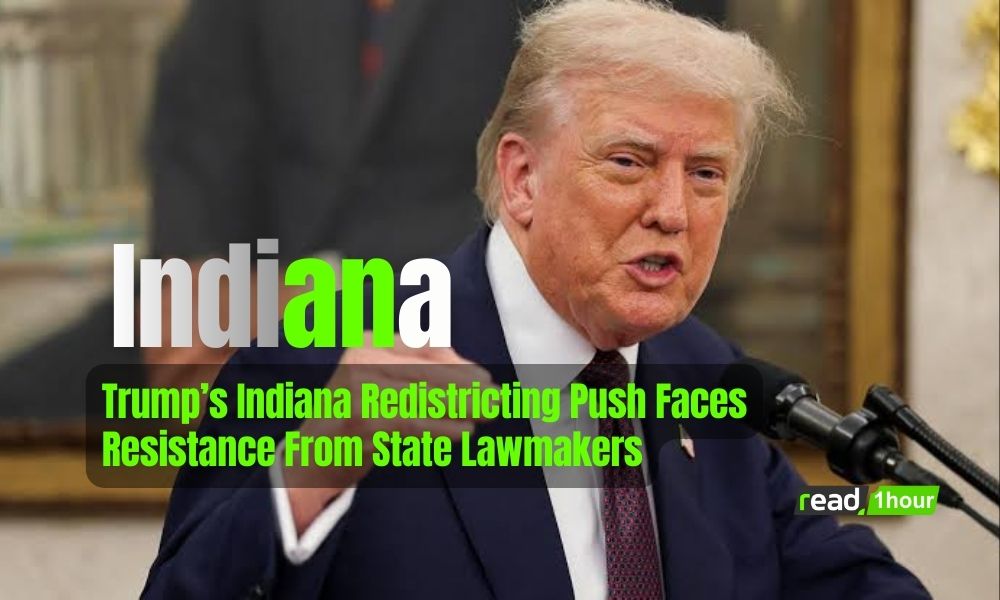
Controversy began when Trump publicly urged Indiana Republicans to redraw congressional districts in a way that would strengthen GOP dominance and limit Democratic gains. His push came amid a broader national strategy by allies seeking to reshape electoral maps in battleground states. However, Indiana officials responded with firm resistance, emphasizing that redistricting decisions must remain a state-led process.
“We can’t be bullied,” one senior Indiana lawmaker said following internal party discussions. “Indiana voters elect us to represent local interests, not to follow demands from outside political forces.” The comment quickly gained traction, symbolizing a rare moment of public defiance against Trump’s influence within Republican ranks.
Indiana has long been considered a reliably conservative state, but demographic changes and suburban shifts have made redistricting more sensitive. Legal experts note that aggressive map manipulation could invite lawsuits, federal scrutiny, and voter backlash—risks that many state legislators appear unwilling to take. Some lawmakers reportedly warned that excessive redrawing could undermine public trust and damage the party’s credibility. Pushback highlights a broader trend emerging within the Republican Party, where state leaders are increasingly asserting independence from national figures. While Trump remains influential, especially among the party’s base, his involvement in local governance issues has sometimes complicated internal dynamics. Political analysts say Indiana’s response reflects a calculation that long-term stability matters more than short-term political advantage. Democrats seized on the moment, portraying the resistance as proof that voters are tired of partisan power plays. Advocacy groups also praised Indiana lawmakers for prioritizing democratic norms over political pressure. Several organizations reiterated calls for transparent redistricting processes and independent oversight to ensure fair representation. Episode also carries national implications. With control of the U.S. House often determined by narrow margins, redistricting battles have become increasingly high-stakes. Trump’s setback in Indiana suggests that even in traditionally aligned states, redistricting efforts may face stronger resistance than expected—especially when legal and public opinion risks loom large.
As election season approaches, Indiana’s stance may serve as a model for other states grappling with similar pressures. Whether this signals a lasting shift in how state leaders respond to national political influence remains uncertain. What is clear, however, is that Indiana’s lawmakers have drawn a firm line, signaling that local governance will not be dictated from afar.
For now, Trump’s redistricting push stands as a reminder that political power—even at the national level—has limits when it clashes with state authority and growing voter awareness.