
Supreme Court Takes Up Critical Case on Trump’s Presidential Authority Limits
read1hour delivers latest news, stock market updates, gadgets, mobile reviews, and trending stories daily.
In a significant constitutional moment, the U.S. Supreme Court has agreed to hear a major test of presidential powerinvolving former President Donald Trump’s firing of a Federal Trade Commission (FTC) commissioner. The case is expected to have long-lasting consequences for the balance of authority between the White House and independent federal agencies.
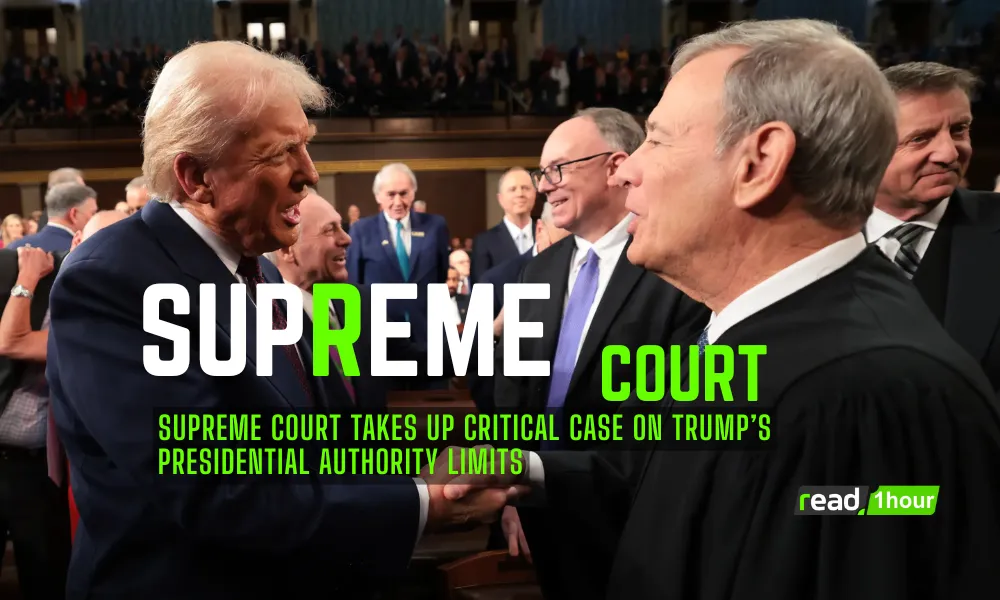
The dispute centers on Trump’s removal of an FTC commissioner before the end of their fixed term, a move critics argue violated federal protections designed to keep regulatory agencies independent from political influence. Supporters of the former president say the Constitution clearly grants presidents the power to dismiss executive officials who do not align with their administration’s priorities.
This case, now set for full arguments before the Court, could reshape modern governance. Legal scholars say the outcome may redefine how far presidential power extends—and whether the long-standing independence of agencies like the FTC, SEC, and Federal Reserve can remain intact in the face of executive pressure.
Historically, independent agencies were created by Congress to operate without direct political interference, allowing them to make economic, trade, and regulatory decisions based on law rather than political ideology. These agencies typically have commissioners who serve fixed terms and can be removed only for cause, not simply for policy disagreements. Trump’s decision to fire the FTC official challenged this framework directly.
Supreme Court’s decision to hear the case comes after months of legal debate in lower courts, where judges issued conflicting rulings. Some courts argued that Congress has clear authority to protect independent agency officials from political firings. Others said that such restrictions undermine the president’s ability to faithfully execute federal laws, a core constitutional duty.
The case arrives at a moment of heightened national interest in executive authority. Over the last decade, presidents from both parties have tested or expanded their powers through executive orders, emergency declarations, and aggressive administrative actions. Court’s ruling could set new boundaries—either reinforcing the president’s ability to remove federal officers or strengthening the independence of regulatory institutions.
Political experts say the stakes extend far beyond Trump. Any ruling will apply to future presidents, shaping how they interact with key agencies that oversee everything from consumer protection and trade to national security and financial markets. A ruling in favor of broad presidential removal power could give the White House significantly more control, while a ruling limiting that power may preserve the current system of checks and balances. Supreme Court is expected to hear oral arguments later this term, with a decision likely to arrive in the summer. Until then, legal observers, lawmakers, and policy analysts will be closely watching a case that could redefine the structure of American governance for decades to come.