
Polls Signal Trouble For Trump As Voters Show Signs Of Shift
read1hour delivers latest news, stock market updates, gadgets, mobile reviews, and trending stories daily.
Recent opinion polls suggest former President Donald Trump may be facing growing political trouble, with new data indicating a potential setback in his next major electoral test. The findings point to shifting voter sentiment in key demographics and battleground regions, raising questions about Trump’s momentum as the political landscape continues to evolve.
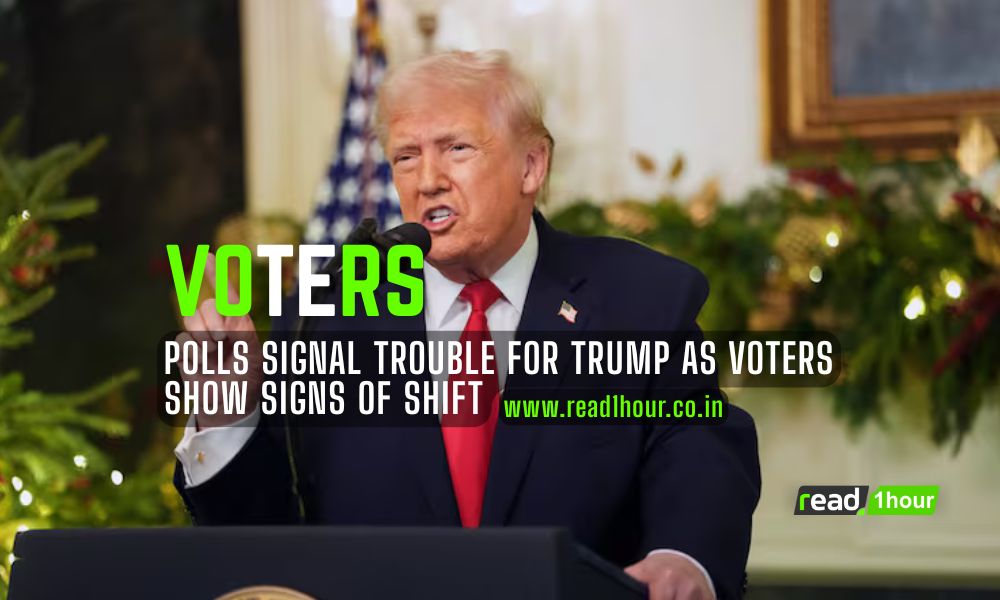
According to multiple national and state-level surveys
released this week, Trump’s support has softened among independent voters and
suburban constituencies—groups that played a decisive role in previous
elections. While his core base remains largely loyal, analysts note that even
small declines among swing voters could prove costly in closely contested
races.
Pollsters highlight economic concerns, political fatigue,
and ongoing legal challenges as factors influencing voter attitudes. Many
respondents cited frustration with political polarization and expressed
interest in stability and predictability, themes that appear to be gaining
traction across party lines. These trends suggest that Trump’s messaging
strategy may need recalibration to expand his appeal beyond traditional
supporters.
The surveys also show rising competition from alternative
political figures, with undecided voters increasingly open to different
leadership styles. Analysts say this openness reflects a broader national mood
rather than a single campaign misstep. “The data shows vulnerability, not
collapse,” said one election analyst, noting that Trump remains a formidable
figure but no longer enjoys the same polling dominance in several regions.
Trump’s campaign has pushed back against the polls, calling
them misleading and unrepresentative. Campaign officials argue that past
elections have shown Trump outperforming survey expectations and emphasize
strong fundraising numbers and high attendance at rallies. They insist that
enthusiasm among supporters remains strong and that polls fail to capture voter
turnout dynamics.
However, political strategists caution that repeated warning
signs across different polling organizations are difficult to ignore. Several
battleground states now show margins narrowing or tilting away from Trump, a
shift that could impact both presidential and down-ballot races. Even modest
changes in turnout among young voters, women, and independents could alter
outcomes significantly.
Another factor weighing on Trump’s polling numbers is the
accumulation of legal and political controversies. While his supporters often
dismiss these issues, undecided voters appear more sensitive to questions of
leadership focus and national stability. Experts say perception, rather than
legal outcomes, often plays a decisive role in shaping public opinion.
Despite the challenges, analysts emphasize that the race
remains fluid. Polls reflect current sentiment, not final results, and
political momentum can change rapidly. Trump’s ability to reframe the
narrative, energize swing voters, and address voter concerns may determine
whether these polling warnings translate into actual losses.
As election season intensifies, polling trends will continue
to shape strategy, media coverage, and voter expectations. For now, the data
suggests Trump faces a tougher road ahead than previously anticipated.