
Midair Helicopter Crash In New Jersey Leaves One Pilot Dead
Two helicopters collide midair in southern New Jersey, killing one pilot and leaving another critically injured.
A tragic midair collision between two helicopters in southern New Jersey has left one pilot dead and another critically injured, authorities confirmed on Sunday. The crash occurred during daylight hours in a rural area, prompting an immediate emergency response from local police, fire crews, and federal aviation officials.
According to initial reports, the helicopters collided while flying at low altitude near open land used for training and recreational aviation. Witnesses in the area reported hearing a loud impact followed by debris falling from the sky. Emergency responders arrived within minutes and secured the crash site as a safety precaution.
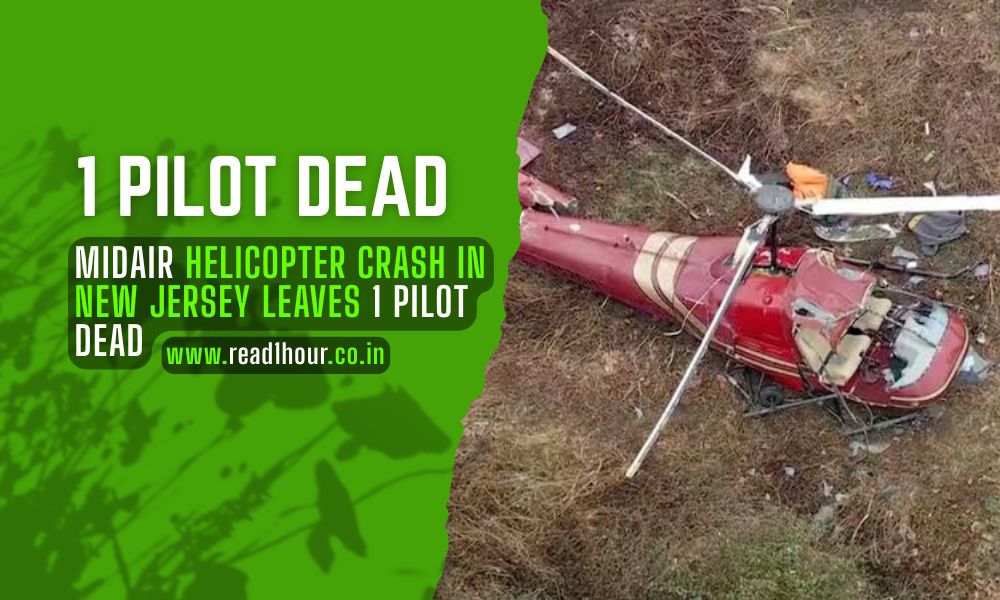
Officials said one helicopter went down immediately, killing its pilot at the scene. The second aircraft managed a hard landing nearby. The surviving pilot was rescued from the wreckage and transported to a regional trauma center, where they remain in critical condition. Authorities have not released the identities of the pilots pending family notification.
The Federal Aviation Administration (FAA) and the National Transportation Safety Board (NTSB) have launched a joint investigation to determine the cause of the crash. Early inquiries will focus on flight paths, air traffic communication, visibility conditions, and whether the helicopters were operating under visual flight rules at the time of the collision.
Local officials confirmed that no civilians on the ground were injured. The crash occurred away from residential neighborhoods, limiting further damage. Fire crews worked to extinguish small fuel fires and prevent environmental contamination from leaked aviation fuel.
Aviation experts say midair helicopter collisions are rare but often catastrophic when they occur. Unlike fixed-wing aircraft, helicopters frequently operate at lower altitudes and in less regulated airspace, particularly during training or private operations. Investigators will examine whether both aircraft were equipped with collision-avoidance technology and if standard safety procedures were followed.
The incident has raised renewed concerns about airspace coordination in regions where multiple helicopters operate simultaneously. Aviation safety advocates have emphasized the importance of communication protocols and situational awareness, especially in mixed-use airspace.
Community members expressed shock and sorrow following the crash. Local leaders offered condolences to the families involved and praised first responders for their swift and coordinated action. Counseling resources have been made available to emergency personnel affected by the incident.
The FAA has temporarily restricted air traffic in the immediate area while investigators document the wreckage and recover flight data. Officials say a preliminary report may be released within days, though a full investigation could take several months.
As authorities work to determine what went wrong, the incident serves as a sobering reminder of the risks faced by aviation professionals and the importance of ongoing safety oversight in the skies.