
Linked Campus Shootings Shock Academia As Brown And MIT Attacks Connected
read1hour delivers latest news, stock market updates, gadgets, mobile reviews, and trending stories daily.
Authorities have confirmed that the shootings involving professors at Brown University and the Massachusetts Institute of Technology (MIT) are linked, marking a disturbing series of attacks that has shaken the academic community. Officials said the suspect was later found dead, bringing an end to an investigation that spanned multiple states and raised urgent questions about campus safety.
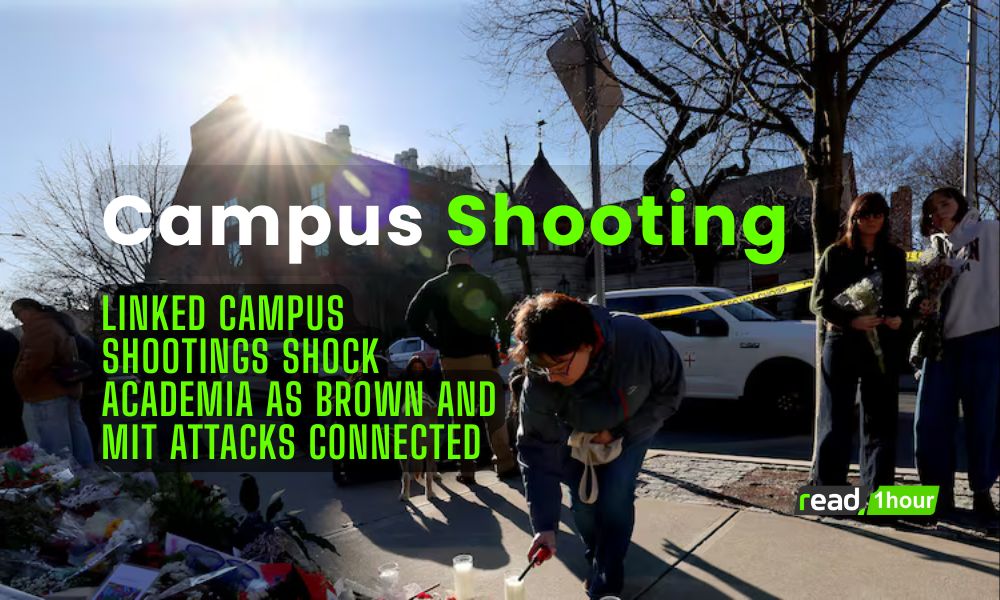
Law enforcement agencies revealed that evidence collected from both crime scenes—including ballistic data, digital records, and witness accounts—pointed to a single suspect. The individual is believed to have targeted the victims in separate incidents before fleeing. Officials have not disclosed the suspect’s identity or cause of death, citing an ongoing investigation and pending family notifications.
The first shooting occurred near Brown University, where a faculty member was injured in what initially appeared to be an isolated incident. Days later, a second attack involving an MIT professor prompted a multi-agency response and heightened security across university campuses in the region. The connection between the two incidents was established after investigators identified matching forensic markers and travel patterns linked to the suspect.
Both universities responded swiftly, implementing temporary lockdowns, increasing campus police presence, and offering counseling services to students and staff. University leaders emphasized that classes and research activities would continue, but with additional safety measures in place. “The wellbeing of our academic community remains our top priority,” a university spokesperson said.
Federal and state officials praised the cooperation between campus police, local departments, and federal agencies. According to investigators, coordinated information sharing played a key role in identifying the suspect and preventing further harm. Authorities stressed that there is no ongoing threat to the public.
The shootings have reignited a national conversation about security on college campuses, particularly for faculty members who may face risks related to public-facing research, controversial topics, or online exposure. Experts say universities are increasingly reviewing threat assessment protocols, emergency alert systems, and access controls for academic buildings.
Academic leaders across the country expressed solidarity with the affected institutions. Messages of support poured in from faculty associations, student groups, and research organizations, underscoring concerns about safety in educational environments that are traditionally viewed as open and collaborative.
Officials said investigators are continuing to examine the suspect’s background, potential motives, and digital footprint to determine whether the attacks were premeditated or influenced by external factors. A comprehensive report is expected once the investigation concludes.
As the academic year progresses, universities nationwide are reassessing security strategies while balancing openness and accessibility. For many in higher education, the linked shootings serve as a sobering reminder of the need for vigilance, preparedness, and community support in safeguarding campuses.