
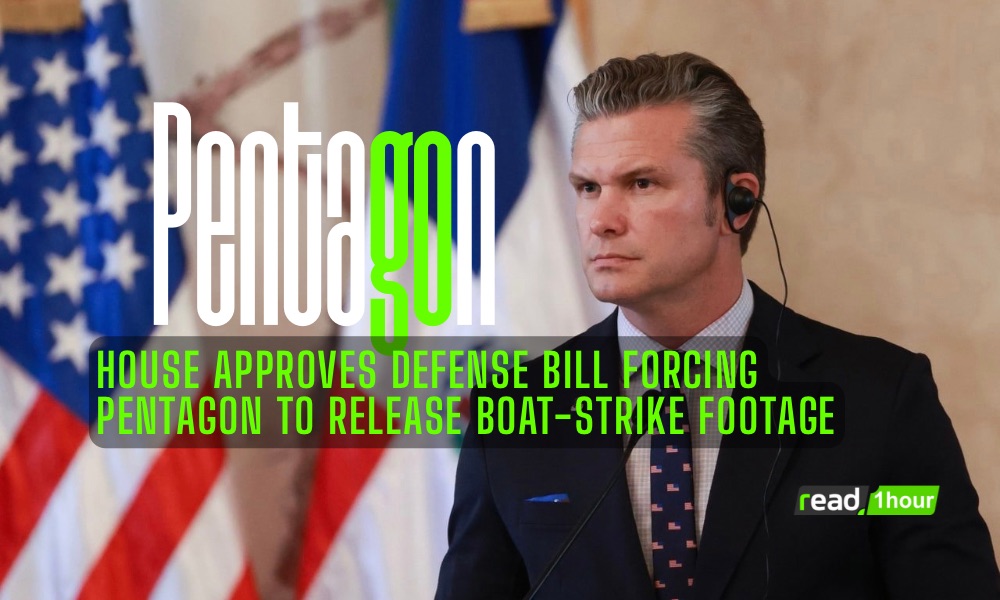
House Approves Defense Bill Forcing Pentagon to Release Boat-Strike Footage
read1hour delivers latest news, stock market updates, gadgets, mobile reviews, and trending stories daily.
In a major development on Capitol Hill, the U.S. House of Representatives has passed a new defense authorization billthat includes a provision compelling the Pentagon to release long-withheld boat-strike incident videos. The move has sparked nationwide debate over transparency, military accountability, and public access to sensitive defense footage.
The legislation, passed with strong bipartisan support, directs the Department of Defense to provide Congress and the public with visual evidence connected to a series of high-profile maritime incidents. These include naval encounters, boat-strike accidents, and disputed military operations occurring in restricted or contested waters.
Lawmakers backing the measure argue that releasing the videos is essential for building public trust and ensuring taxpayers have clarity on how the military conducts dangerous operations at sea. They say the Pentagon’s refusal to release the footage for years has raised unnecessary suspicions and fueled speculation about the true nature of the incidents.
Opponents, however, warn that the release could compromise operational security. They argue that certain videos may reveal classified tactics, sensitive equipment, or identifiable personnel who could become targets. Defense officials have previously stated that the footage needs strict review before any public release to avoid jeopardizing national security.
The newly passed bill significantly tightens those limitations. Under the provision, the Pentagon must release the footage within a fixed timeline unless it can demonstrate a direct, identifiable threat to national security. Congressional committees will also have enhanced authority to review any decisions to withhold videos.
The debate over the boat-strike footage gained national attention earlier this year after lawmakers demanded updates on several incidents involving U.S. naval vessels and unidentified boats operating near strategic waterways. These events allegedly resulted in collisions, evasive maneuvers, and disputed accounts of who initiated aggression. Critics say the lack of publicly available evidence has prevented accurate reporting and accountability.
The defense bill aims to resolve this dispute by ensuring footage becomes a matter of public record. Analysts say the move reflects a broader push in Washington for transparency across federal agencies, especially within the military. The Pentagon is now under pressure to comply swiftly, and officials have already begun preliminary assessments of the videos.
Military analysts note that this decision could reshape how future incidents at sea are documented and disclosed. They believe the requirement will encourage stronger reporting standards and more reliable communication with both Congress and the public.
The bill now heads to the Senate, where it is expected to receive strong consideration. If approved, the Pentagon will likely face one of its most consequential transparency obligations in recent years. For now, all eyes remain on how the defense establishment responds to a new era of legislative oversight.