
Hong Kong Orders Scaffolding Net Removal After Deadly Fire Toll Climbs
Hong Kong orders citywide scaffolding net removal after a deadly high-rise fire raises the death toll to 159.
Death toll from the devastating Hong Kong scaffolding fire climbed to 159 on Sunday, prompting officials to order a citywide removal of safety nets surrounding thousands of construction sites. The government’s emergency action marks one of the most significant safety crackdowns in the region in over a decade.
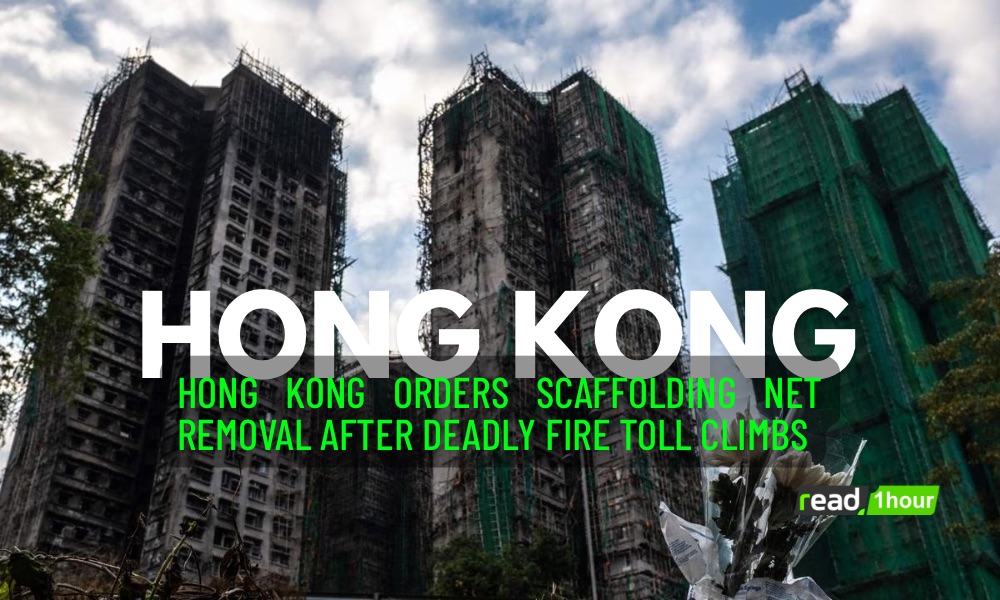
Authorities confirmed that the blaze, which broke out on a high-rise renovation project in Kowloon, spread rapidly due to aging nylon scaffolding nets that ignited within minutes. The fire trapped dozens of workers, residents, and nearby pedestrians before firefighters managed to contain the flames. Keywords: Hong Kong fire, scaffolding net removal, Kowloon high-rise blaze, Hong Kong construction safety, fire death toll Hong Kong.
According to the Fire Services Department, several of the nets had not been replaced for years, despite legal requirements mandating regular inspections. Investigators believe the combination of strong winds, flammable materials, and outdated installation practices contributed to the fire’s extreme intensity.
Hong Kong Chief Executive Adrian Lau called the tragedy “a preventable disaster,” announcing immediate enforcement orders requiring construction companies to dismantle all external scaffolding nets until they pass new, stricter safety checks. Lau also confirmed that authorities will open a criminal investigation to determine whether negligence or regulatory violations played a role.
Construction unions reacted strongly, urging the government to provide clear transition guidelines. Many workers fear that sudden removal of protective netting could increase risks of falling debris, especially in crowded neighborhoods. However, safety experts argue that outdated nets pose a far greater threat and must be replaced without delay.
Residents living near high-rise projects expressed relief at the government’s swift response but raised concerns about long-term accountability. Several families who lost loved ones during the fire demanded compensation and transparent updates on ongoing investigations. Social media platforms across Hong Kong were filled with emotional tributes, anger, and calls for reform.
The tragedy has reignited debate over Hong Kong’s construction safety standards, which critics say have lagged behind modern engineering requirements. Urban planners note that rapid development, tight space, and reliance on traditional bamboo scaffolding create unique challenges that need updated regulations and better monitoring.
International observers have also taken interest, as Hong Kong is widely known for its dense skyline and heavy reliance on vertical construction. Global safety agencies suggested that the incident could spark broader conversations about worker protection in high-rise renovation industries.
As the city mourns, emergency crews continue searching for missing individuals, though officials warn that the death toll may rise further. Meanwhile, construction companies have been given 72 hours to report the status of their scaffolding systems and begin compliance procedures.
Authorities promise that full transparency, stricter laws, and improved worker safety training will be central to Hong Kong’s reconstruction effort. For now, the city faces the difficult task of balancing grief, accountability, and urgent reforms to prevent another tragedy of this scale.