
Former Senator Ben Sasse Reveals Stage Four Pancreatic Cancer Diagnosis Publicly
read1hour delivers latest news, stock market updates, gadgets, mobile reviews, and trending stories daily.
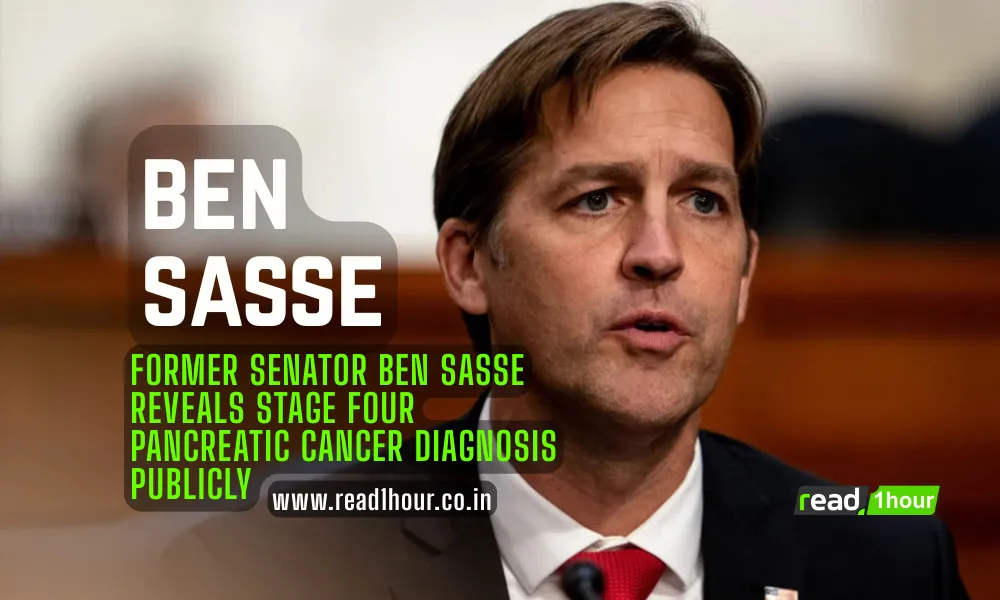
Former U.S. Senator Ben Sasse has announced that he has been diagnosed with stage four pancreatic cancer, a disclosure that has prompted widespread reactions across the political spectrum. In a deeply personal statement, Sasse acknowledged the seriousness of the illness, saying he is realistic about the prognosis while remaining focused on spending meaningful time with his family.
Sasse, who
previously represented Nebraska in the U.S. Senate and later served as
president of the University of Florida, made the announcement publicly to avoid
speculation and to speak honestly about his condition. He described pancreatic
cancer as aggressive and difficult to treat, noting that the disease has
already spread beyond the pancreas.
Medical
experts say stage four pancreatic cancer is among the most challenging cancers
to treat, with limited long-term survival rates. Symptoms often appear late,
making early detection rare. Sasse emphasized that his diagnosis came after
months of medical evaluations and consultations with specialists.
In his
message, Sasse reflected on life, faith, and public service, stating that he
wants to use the time ahead to be present for his wife and children rather than
pursue further professional ambitions. He also expressed gratitude toward
doctors, caregivers, and supporters who have reached out following the
announcement.
Political
leaders from both parties issued statements offering support and prayers. Many
praised Sasse for his intellectual independence during his Senate tenure and
his willingness to challenge political norms. Colleagues described him as a
thoughtful voice who valued constitutional principles and civil discourse, even
during times of intense partisan division.
Sasse
resigned from the Senate in 2023 to take on the University of Florida
presidency, a role he later stepped away from amid leadership changes. His
announcement has reignited public discussion around pancreatic cancer
awareness, funding for research, and the importance of early screening for
high-risk individuals.
Health
advocacy groups used the moment to highlight the urgent need for increased
investment in cancer research, particularly for diseases with low survival
rates. According to the American Cancer Society, pancreatic cancer remains one
of the leading causes of cancer-related deaths in the United States despite
accounting for a smaller percentage of overall diagnoses.
Public
response has been largely supportive, with messages of encouragement pouring in
from constituents, academics, and public figures nationwide. Many commended
Sasse for his transparency and directness, noting that his candid approach has
helped bring attention to a disease often discussed quietly.
As he begins
treatment and focuses on personal priorities, Sasse has asked for privacy for
his family while expressing hope that sharing his story may help others facing
similar diagnoses feel less alone.