
Federal Emergency Declared As Historic Flooding Devastates Communities Across Washington State
Federal emergency declared after historic flooding inundates Washington state, forcing evacuations and triggering large-scale disaster response effort
A federal emergency has been declared in Washington state after historic flooding submerged communities, damaged infrastructure, and forced thousands of residents to evacuate. Torrential rainfall over several days overwhelmed rivers, storm drains, and levee systems, prompting state and federal officials to activate emergency response measures.
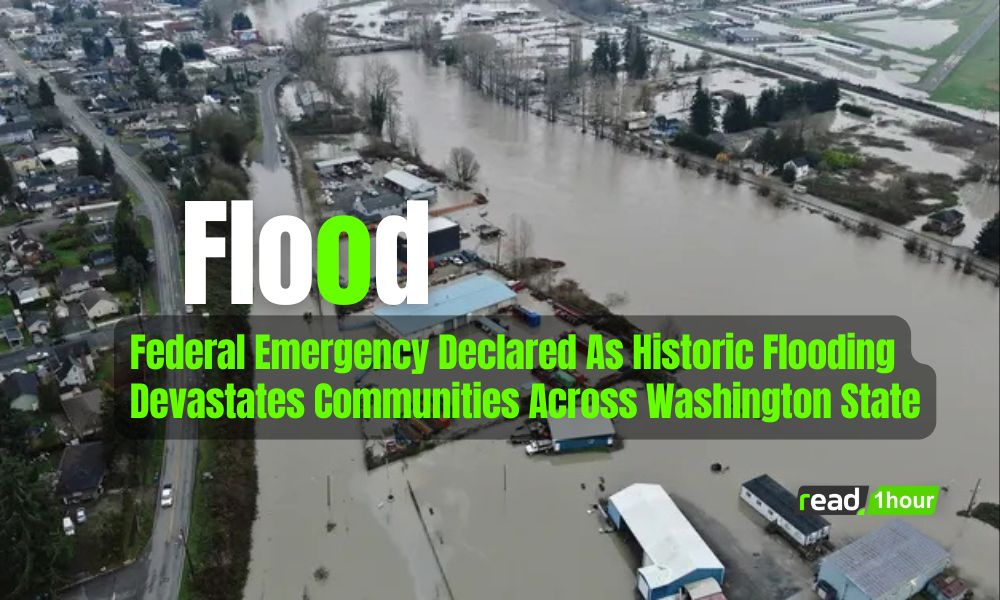
The flooding impacted multiple counties, with low-lying neighborhoods and river-adjacent towns facing the worst conditions. Emergency crews conducted water rescues as roads disappeared under rising floodwaters. Several highways were closed due to landslides and washed-out bridges, significantly disrupting travel and supply routes across the region.
Governor officials confirmed that the emergency declaration will unlock federal resources, including disaster relief funding, emergency housing support, and technical assistance for recovery efforts. The Federal Emergency Management Agency (FEMA) has begun coordinating with local authorities to assess damage and provide immediate aid to affected residents.
Meteorologists reported that the flooding was triggered by a rare combination of intense rainfall and saturated ground conditions. Snowmelt from higher elevations further increased river levels, pushing many waterways beyond their historical crests. Climate experts say such extreme weather events are becoming more frequent, raising concerns about future flood risks in the Pacific Northwest.
Residents described chaotic scenes as water rushed into homes and businesses. Many were forced to evacuate in the middle of the night, leaving behind belongings and uncertain about when they might return. Emergency shelters were quickly set up in schools and community centers, offering temporary housing, food, and medical assistance.
Utility services were also affected, with power outages reported in several areas. Officials warned that additional outages could occur as crews work to restore damaged electrical lines and water systems. Public health authorities advised residents to avoid floodwaters due to contamination risks and to follow evacuation orders strictly.
Local governments urged people to stay informed through official alerts as weather conditions remain unstable. While rainfall has eased in some regions, forecasters caution that rivers may continue rising before cresting, increasing the threat of additional flooding and landslides.
The economic impact is expected to be significant, particularly for agriculture, small businesses, and transportation networks. Farmers reported flooded fields and livestock losses, while business owners assessed water damage to storefronts and inventory. State officials said damage assessments will take weeks, and recovery efforts may continue for months.
Federal leaders expressed solidarity with Washington residents, emphasizing the importance of swift disaster response and long-term infrastructure resilience. Emergency funding will support both immediate relief and rebuilding efforts, including road repairs, housing reconstruction, and flood mitigation projects.
As Washington begins the long recovery process, officials stressed community cooperation and preparedness. The historic flooding serves as a stark reminder of the growing challenges posed by extreme weather and the need for stronger disaster readiness across vulnerable regions.