
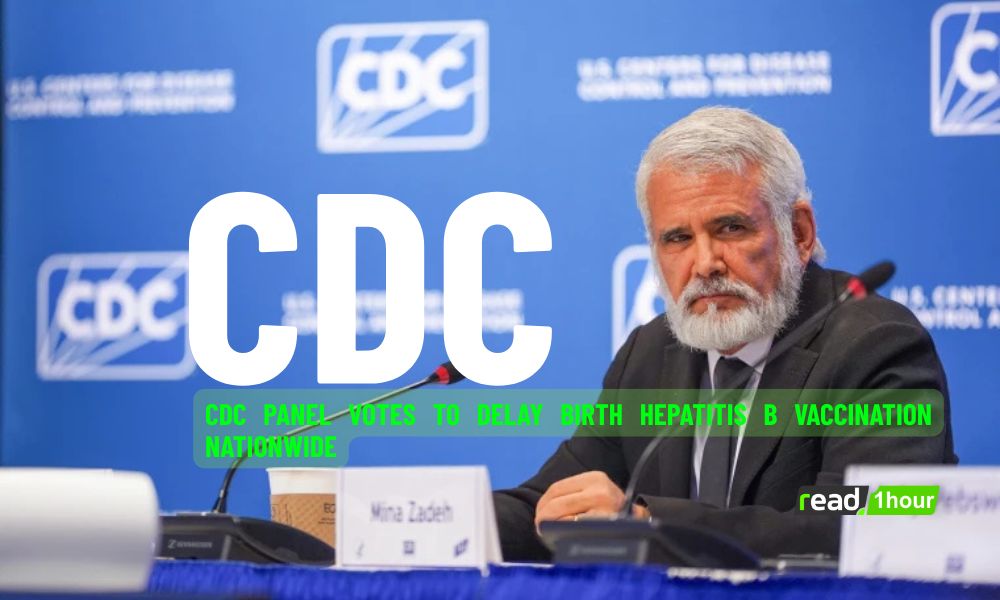
CDC Panel Votes To Delay Birth Hepatitis B Vaccination Nationwide
read1hour delivers latest news, stock market updates, gadgets, mobile reviews, and trending stories daily.
In a major shift in national immunization strategy, a CDC advisory panel has recommended delaying the birth dose of the hepatitis B vaccine, effectively overturning a policy that has been in place for more than 30 years. The new recommendation suggests administering the first dose at a later pediatric appointment rather than immediately after birth, marking one of the most significant changes in U.S. vaccine guidelines in decades.
CDC’s Advisory Committee on Immunization Practices (ACIP) voted in favor of the updated guidance after reviewing extensive data on hepatitis B infection rates, maternal screening improvements, and newborn vaccination outcomes. The panel emphasized that the decision is based on modern medical advancements that allow earlier identification of mothers carrying the hepatitis B virus.
For decades, the birth dose was considered essential to prevent early-life infection, particularly in cases where a mother’s hepatitis B status was unknown. But ACIP members explained that stronger prenatal testing, better access to medical records, and improved maternal care have lowered the risk of missed diagnoses.
However, the recommendation has generated debate among healthcare professionals. Some pediatric experts support the move, saying the updated schedule will allow doctors more flexibility and help reduce unnecessary interventions in low-risk newborns. They argue that targeted vaccination based on maternal screening can be equally effective while reducing pressure on hospital delivery teams.
Others are more cautious, warning that even with advanced screening, gaps in maternal testing still exist — especially among underserved communities, teenage pregnancies, and individuals without consistent prenatal care. These groups may face higher risks of hepatitis B transmission if the birth dose is delayed.
In response, CDC officials stressed that the recommendation includes strict safeguards. Hospitals must ensure complete maternal hepatitis B testing, and infants born to mothers with unknown or positive status will still receive the vaccine immediately after birth. The updated policy applies only when thorough screening can be guaranteed.
Public reaction has been mixed. Many parents welcomed the change, saying it offers more autonomy and reduces pressure at the time of delivery. Others expressed concerns on social media, questioning whether delaying the birth dose might undermine newborn protection. Health experts urged families to follow pediatric guidance and to understand that the vaccine remains highly effective regardless of timing.
CDC will now review implementation details and coordinate with state health departments before releasing a finalized schedule. Pediatricians expect the new guideline to take effect sometime next year, although hospitals may begin adjusting procedures sooner.
As the United States continues to modernize vaccination strategies, this policy shift reflects the growing role of data-driven decision-making in public health. While the long-term impact remains to be seen, the move highlights how evolving science can reshape decades-old medical practices.