
Bangladesh Mob Violence Case Sparks Outrage After Man Burned Alive
read1hour delivers latest news, stock market updates, gadgets, mobile reviews, and trending stories daily.
Bangladesh has been shaken by reports of a brutal mob violence incident, where a man belonging to the Hindu community was allegedly burned alive in a rural area, triggering widespread outrage and concern over communal harmony and rule of law. Authorities have confirmed that the case is under active investigation, while several individuals have been detained for questioning.
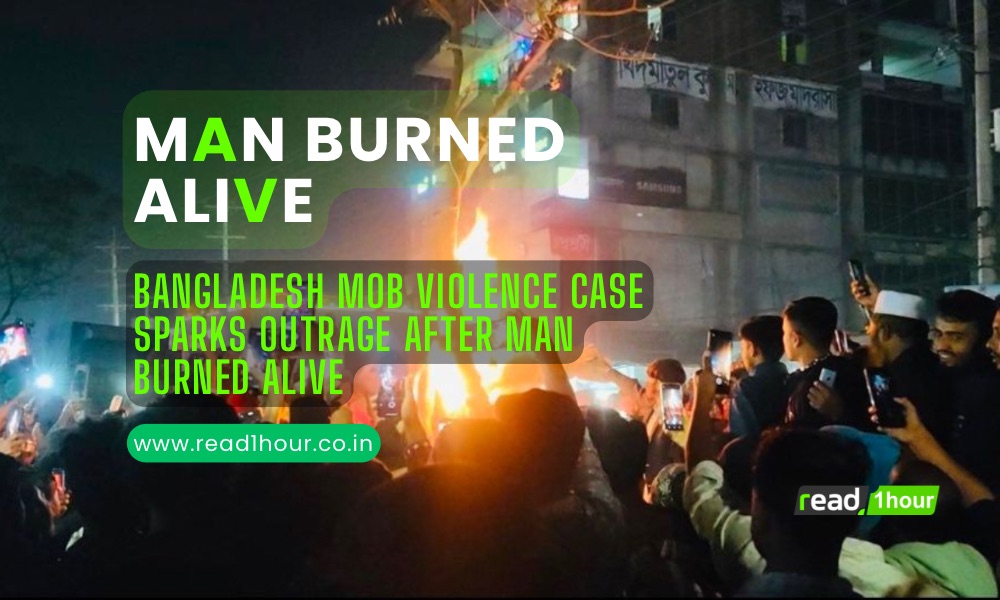
According to preliminary police statements, the incident occurred following a local dispute that escalated rapidly into violence. While early rumors attempted to give the incident a religious angle, law enforcement officials have cautioned against jumping to conclusions. They emphasized that the exact motive is still being examined, including whether the act was driven by personal enmity, misinformation, or mob provocation rather than organized communal intent.
Eyewitness accounts suggest that tensions had been building in the area for days before the incident. A disagreement—reportedly linked to social media allegations or a local argument—spiraled out of control when a crowd gathered. Police sources stated that false information may have played a role in inciting anger, a pattern seen in several past mob-related incidents across South Asia.
Human rights organizations in Bangladesh have strongly condemned the act, calling it a grave failure of law enforcement and community responsibility. They urged authorities to ensure swift justice and to protect minority communities from targeted violence. Several civil society groups also stressed that mob violence harms the social fabric of the country and undermines democratic values.
Bangladesh government has responded by ordering a high-level probe and promising strict action against those responsible. Senior officials stated that no individual or group would be spared if found guilty, regardless of religious or political background. Additional security forces have been deployed in the region to prevent further unrest.
Religious leaders from multiple communities have appealed for calm, urging citizens not to spread unverified information. They emphasized that violence in the name of religion or rumor has no place in society and called for unity during a tense moment.
This incident has once again highlighted the dangerous role of misinformation, mob psychology, and delayed intervention. Experts say that rapid rumor-spreading—especially through social media—has increasingly contributed to such violent outbreaks, making digital literacy and prompt policing more crucial than ever.
As the investigation continues, authorities have urged the public to rely only on official updates. The victim’s identity has not been fully disclosed, pending family notification, and officials say confirmed details will be released after forensic and legal procedures are completed. Case has drawn attention beyond Bangladesh, with international observers calling for transparency, accountability, and protection of minority rights. The coming days are expected to be crucial as investigators work to uncover what truly led to one of the most disturbing acts of mob violence reported in recent months.