
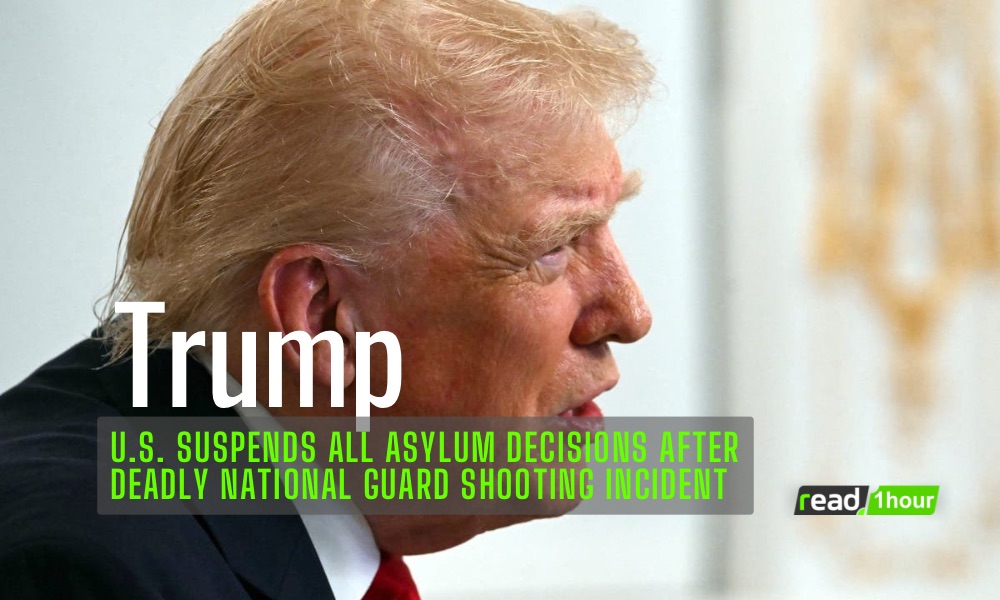
U.S. Suspends All Asylum Decisions After Deadly National Guard Shooting Incident
U.S. pauses all asylum decisions after National Guard shooting, sparking national debate over border safety and migrant rights.
In a sudden and controversial move, the United States government has temporarily halted all asylum-claim decisions nationwide following a deadly shooting involving a National Guard member at a border processing facility in Texas. The announcement, made late Monday by the Department of Homeland Security (DHS), has triggered sharp reactions from immigrant-rights organizations, legal experts, and several lawmakers.
According to officials, the shooting occurred during a chaotic altercation early Sunday morning near a temporary migrant intake center along the Texas–Mexico border. Authorities say a National Guard soldier fired multiple shots after reportedly feeling “threatened during a rapidly escalating situation.” One migrant was killed and another seriously injured. Federal and state agencies have launched a joint investigation to determine what led to the violence.
DHS Secretary Maria Rodriguez confirmed the nationwide pause on asylum decisions, calling it a “necessary step to ensure safety, transparency, and accountability.” She added that the government must review security protocols and border-facility operations to prevent further incidents. While the halt does not stop migrants from applying for asylum, it suspends all final rulings until the investigation concludes.
Immigration advocates argue that the suspension could create an overwhelming backlog, leaving thousands of families in legal limbo. “People fleeing violence and persecution are now stuck waiting even longer because of one tragedy,” said Elena Morales, director of a national refugee support group. She added that the government should improve training and oversight rather than freeze an essential humanitarian process.
Republican leaders, however, expressed support for the temporary halt, saying it is necessary to reassess border operations. Some lawmakers stated that the shooting highlights the challenges faced by frontline personnel who manage record migrant arrivals. “Security must come first,” one senator said, urging the administration to strengthen border enforcement measures.
The White House, while acknowledging concerns from both sides, emphasized that the pause is temporary. Officials stated that no changes will be made to existing asylum laws and that humanitarian protections remain intact. However, critics fear that the halt could become prolonged if the investigation expands or leads to broader policy recommendations.
Legal analysts note that this is the first time in decades that the U.S. has suspended asylum decisions nationwide due to a security incident. They warn that even a short-term pause may deepen delays already affecting tens of thousands of pending cases. The move also raises questions about the role of military personnel at migrant facilities and the risks associated with deploying National Guard units to assist with border management.
As the investigation continues, pressure is building on federal authorities to release more details about the shooting and to outline a clear timeline for resuming asylum decisions. For now, migrants, advocates, and border communities are left facing uncertainty — another chapter in the ongoing debate over America’s immigration system and the balance between security and humanitarian responsibility.