
U.S. And Russia Begin Fragile Peace Talks As Missiles Devastate Kyiv
U.S. and Russia launch fragile Abu Dhabi peace talks while missiles strike Kyiv, highlighting rising tensions and uncertain prospects.
United States and Russia opened a fresh round of high-stakes peace talks in Abu Dhabi on Monday, even as Russian missiles continued to strike Kyiv, leaving residents shaken and global tensions at a boiling point. The rare face-to-face meeting reflected urgent international pressure to de-escalate the conflict, but the violent backdrop underscored the deep challenges ahead.
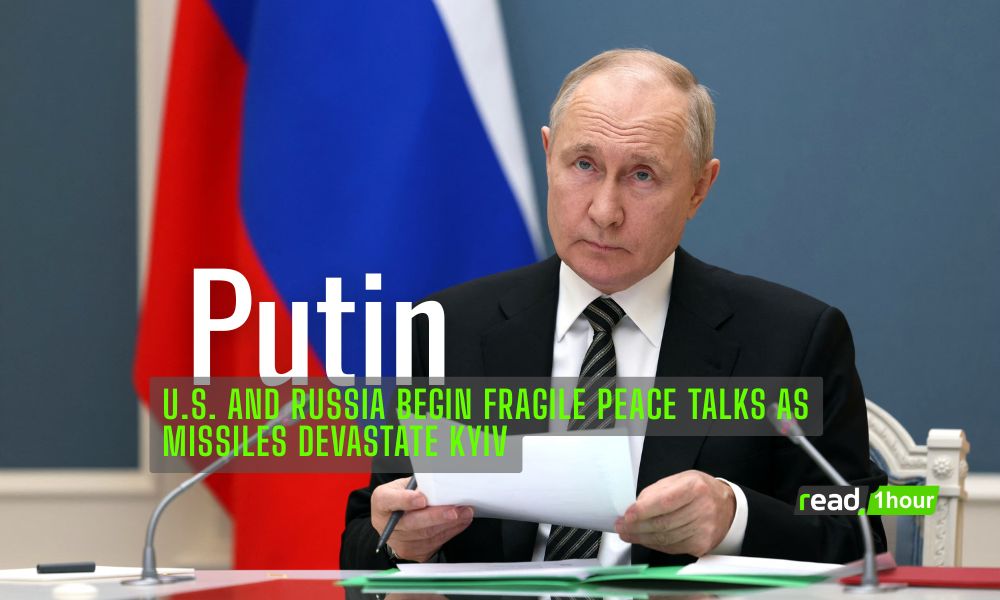
Hosted by the United Arab Emirates, the talks brought together senior American diplomats and Russian negotiators in what officials described as a “critical attempt” to reduce hostilities and reestablish a path toward stability in Eastern Europe. UAE leaders emphasized the need for diplomacy over force, calling the crisis “one of the most dangerous security moments of the decade.”
According to U.S. officials, the discussions focused on a potential ceasefire mechanism, humanitarian corridors, and the protection of key infrastructure. Washington reiterated its stance that peace requires a full halt to Russian attacks on Ukrainian cities. However, early statements suggested Moscow remained firm on territorial demands and security guarantees, complicating the possibility of immediate progress.
Even as diplomats sat down at the negotiating table, Kyiv endured another wave of missile strikes. Ukrainian authorities reported multiple explosions across residential areas, damaging apartment blocks, power lines, and a children’s hospital. Emergency workers rushed through debris-covered streets, rescuing families while air raid sirens echoed through the capital.
Ukrainian President Volodymyr Zelensky strongly criticized Russia’s actions, saying the attacks “once again prove that Moscow talks about peace while waging war on civilians.” He urged the U.S. and its allies to maintain a firm stance in negotiations and continue military support for Ukraine’s defense.
Russia, on the other hand, framed the Kyiv strikes as “strategic operations” targeting military assets. Kremlin spokespersons insisted the ongoing attacks were not meant to influence the Abu Dhabi talks, but analysts say the timing suggests Moscow is trying to strengthen its bargaining position.
International reaction to the simultaneous diplomacy and violence has been mixed. European leaders welcomed the opening of talks but warned that continued attacks would undermine any progress. NATO officials stressed that a ceasefire must be “credible, enforceable, and not merely a pause for regrouping.”
Experts note that the UAE’s involvement reflects its growing role as a neutral mediator in global conflicts. Abu Dhabi has maintained relations with both Washington and Moscow, making it one of the few countries capable of hosting such sensitive discussions.
Despite the bleak atmosphere, diplomats expressed optimism that continued dialogue might eventually reduce the intensity of the war. Still, no breakthrough was expected on the first day, and both sides acknowledged the road ahead would be long and complex.
As missiles fall on Kyiv and negotiators meet under pressure, the world watches closely. The Abu Dhabi peace talks represent a faint but vital chance to shift the conflict’s trajectory—though only sustained commitment from both sides can turn fragile dialogue into lasting peace.