
Lawmakers Demand Answers After Second Boat-Strike Report Raises War Crime Concerns
Lawmakers demand accountability after a second boat-strike report raises serious war crime concerns and prompts deeper Pentagon investigation.
Lawmakers in Washington are raising urgent concerns about potential war crimes after a second reported boat-strike incident involving military operations overseas. The new report, released earlier this week, has intensified scrutiny on the Pentagon and sparked fresh debates about accountability, civilian protection, and the rules governing U.S. military actions.
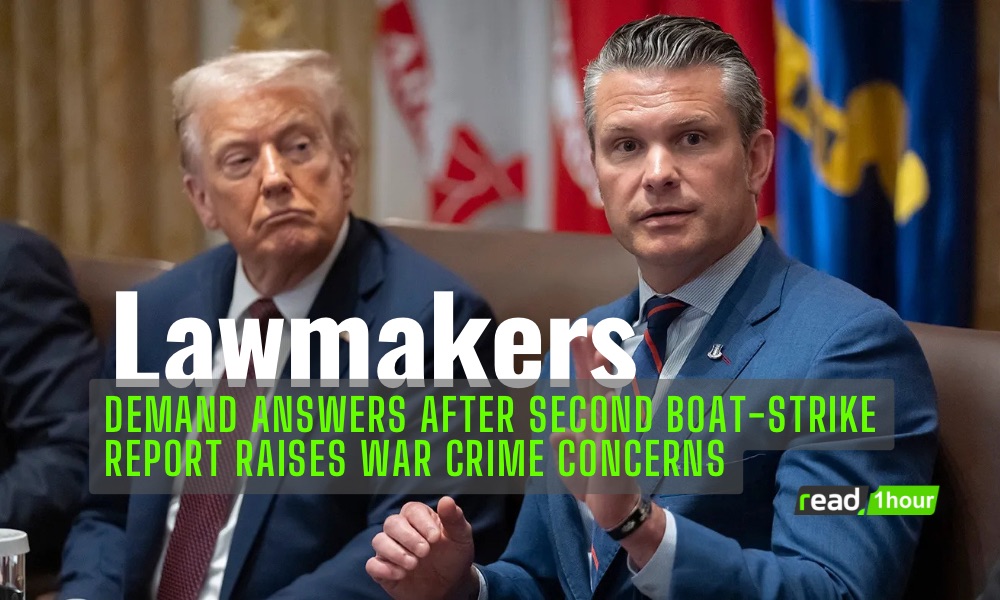
According to the findings, the latest boat-strike incident occurred during a counterterrorism operation in a conflict-affected region. While military officials initially described the strike as “targeted and necessary,” investigators now suggest that civilians may have been aboard the vessel at the time of the attack. This revelation has prompted lawmakers from both parties to demand transparency and full disclosure.
Key lawmakers, including members of the House Armed Services Committee, have urged the Department of Defense to release surveillance footage, mission logs, and communications linked to the strike. Several senators have warned that withholding critical information could undermine public trust and raise questions about whether U.S. forces complied with international humanitarian law.
The second boat-strike report has amplified calls for an independent investigation. Human rights organizations say the pattern of incidents signals a potential violation of the Geneva Conventions, which protect civilians during armed conflict. Advocacy groups also argue that repeated mistakes could erode American credibility globally and weaken alliances in sensitive regions.
Pentagon spokespersons have acknowledged the seriousness of the incident but urged caution before drawing conclusions. They emphasized that threats in maritime conflict zones often evolve quickly and that military personnel must make split-second decisions. Still, officials have confirmed that a formal review is underway to determine whether operational protocols were followed.
Political analysts say the incident lands at a sensitive time, with global tensions rising and international bodies monitoring U.S. military conduct more closely. Allies have privately expressed concern about the implications of further civilian casualties, especially as the U.S. seeks to maintain moral authority on the global stage.
Within Congress, pressure is mounting. Lawmakers are calling for updated rules of engagement, enhanced civilian-risk assessments, and greater oversight of precision-strike technologies. Some representatives have proposed new legislation requiring more detailed reporting to Congress after any strike involving civilian claims.
Experts warn that if future investigations confirm wrongdoing, the U.S. could face criticism from international tribunals and diplomatic partners. They stress that establishing clear facts now is crucial to preventing misinformation and ensuring justice.
For families in the affected region, the strike has become yet another reminder of the cost of conflict. Local authorities say community members are demanding answers and compensation if civilian harm is confirmed.
As the investigation unfolds, one thing is certain: the second boat-strike report has intensified scrutiny, stirred political debate, and placed renewed focus on the importance of transparency in wartime decisions. Lawmakers insist that ensuring accountability is essential—not only for victims but for protecting the integrity of U.S. military operations worldwide.